Areas with limited or inconsistent wind resources can still benefit from renewable wind energy when…

As the demand for clean energy grows, more homeowners are exploring vertical axis wind turbines (VAWTs) as a smart and space-efficient way to generate power. Unlike traditional horizontal wind turbines, vertical axis turbines are compact, quiet, and ideal for residential and urban settings where space and wind direction are limited.
In this blog, we’ll explore how vertical axis wind turbines for homes work, their benefits, costs, and why they’re shaping the future of small wind energy in 2025.
What Is a Vertical Axis Wind Turbine (VAWT)?
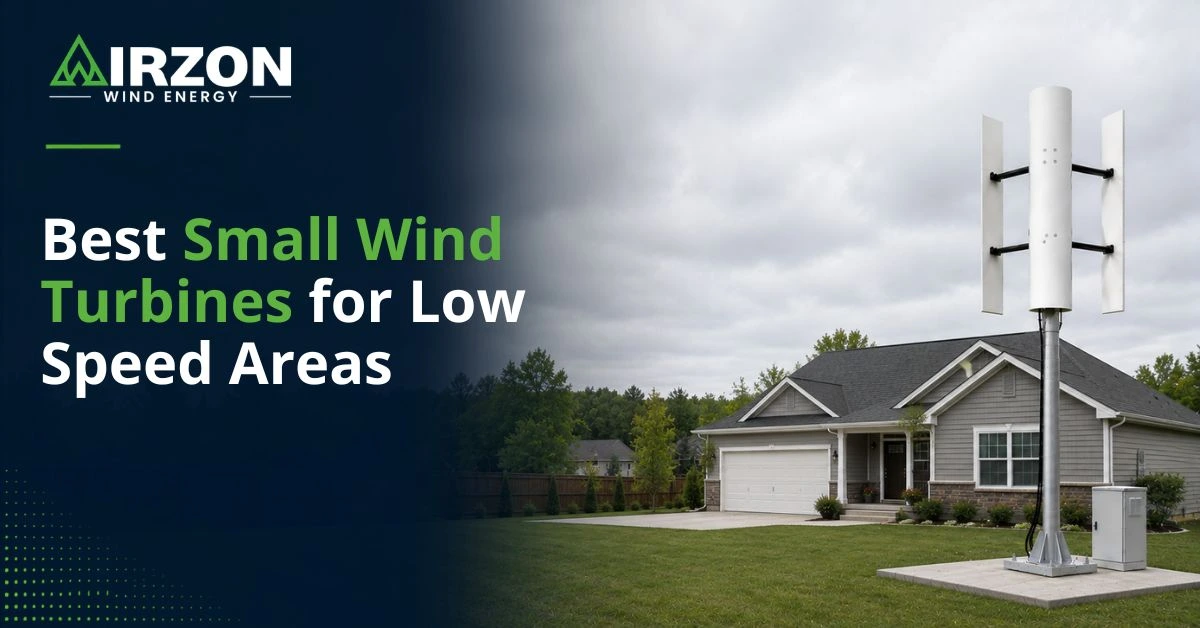
A vertical axis wind turbine has blades that rotate around a vertical axis, allowing it to capture wind from any direction. This makes it perfect for residential rooftops and urban environments, where wind flow is often unpredictable.
Two common types of VAWTs include:
- Darrieus Turbines – Efficient at higher wind speeds with curved blades.
- Savonius Turbines – Ideal for low wind speeds and small-scale applications.
These turbines are often smaller than horizontal-axis models but are well-suited for homes, offices, and hybrid solar-wind systems.
Types of Vertical Axis Wind Turbines
There are mainly two common types of vertical axis wind turbines used in residential setups.
| Type | Description | Best For |
| Darrieus Turbine | Uses curved blades for higher efficiency and speed. | Areas with consistent wind flow. |
| Savonius Turbine | Uses scoop-shaped blades for better low-wind performance. | Urban homes with variable wind directions. |
How Do Vertical Axis Wind Turbines Work?
When the wind blows, the vertical blades spin around the central shaft, converting kinetic energy into mechanical energy. This energy then drives a generator, producing clean electricity.
Unlike horizontal turbines, VAWTs don’t require complex yaw systems to face the wind, making them simpler, quieter, and easier to maintain.
Cost of Installing a Vertical Axis Wind Turbine for Homes
The cost of vertical axis wind turbines depends on their size and power capacity. On average:
- 1 kW systems: ₹1.5–₹2.5 lakh (ideal for small homes)
- 3–5 kW systems: ₹6–₹10 lakh (suitable for standard homes)
- 10 kW+ systems: ₹15–₹20 lakh (for larger houses or farms)
Government subsidies and renewable energy incentives can reduce upfront costs by up to 30–40%, making these turbines more affordable than ever.
Benefits of Vertical Axis Wind Turbines for Homes
Why more homeowners are choosing VAWTs in 2025.
- All-Direction Wind Capture – Generates power regardless of wind direction.
- Compact Design – Ideal for rooftops, balconies, or small yards.
- Low Noise Operation – Quiet performance suitable for residential areas.
- Durable and Low Maintenance – Fewer moving parts and longer lifespan.
- Hybrid Ready – Works seamlessly with solar panels for consistent power.
- Eco-Friendly Power – Reduces carbon footprint and grid dependency.
Looking for the best vertical axis wind turbine? Contact us for the perfect home wind solution today.
Are Vertical Axis Wind Turbines Right for Your Home?
Before installation, homeowners should assess:
- Average wind speed (at least 3–4.5 m/s recommended).
- Available rooftop space and structure stability.
- Local building regulations and zoning requirements.
- Energy demand – to choose the correct turbine capacity.
Consulting with renewable energy experts ensures the system is designed for maximum efficiency and return on investment.
Maintenance and Longevity
VAWTs are known for their low maintenance requirements, needing only periodic inspections for:
- Blade cleaning and alignment
- Lubrication of moving parts
- Checking power output levels
When properly maintained, vertical axis wind turbines can last 20–25 years, offering consistent, clean energy for decades.
The Future of Vertical Axis Wind Turbines
As cities embrace sustainability, vertical axis wind turbines are becoming central to urban energy planning. Innovations in blade design, smart sensors, and lightweight materials are improving efficiency even at low wind speeds. In 2025, these systems are expected to be key players in residential and commercial green energy adoption.
Frequently Asked Questions
Yes, VAWTs are ideal for homes due to their compact size, quiet operation, and ability to generate power from any wind direction.
Costs start around ₹1.5 lakh for small models and can reach ₹20 lakh for higher-capacity systems.
Modern VAWTs are 70–90% efficient in capturing wind energy, especially in urban or low-wind areas.
Absolutely — their lightweight, low-vibration design makes them perfect for rooftops or terraces.
With proper care, they can last 20 to 25 years with minimal maintenance.
Conclusion
Vertical axis wind turbines for homes are redefining how we harness wind energy — offering compact, efficient, and eco-friendly power generation. Whether you’re in a city apartment or countryside home, these turbines can reduce bills, boost energy independence, and contribute to a greener planet.
Related Posts