A power curve is one of the most useful technical tools for understanding how a…
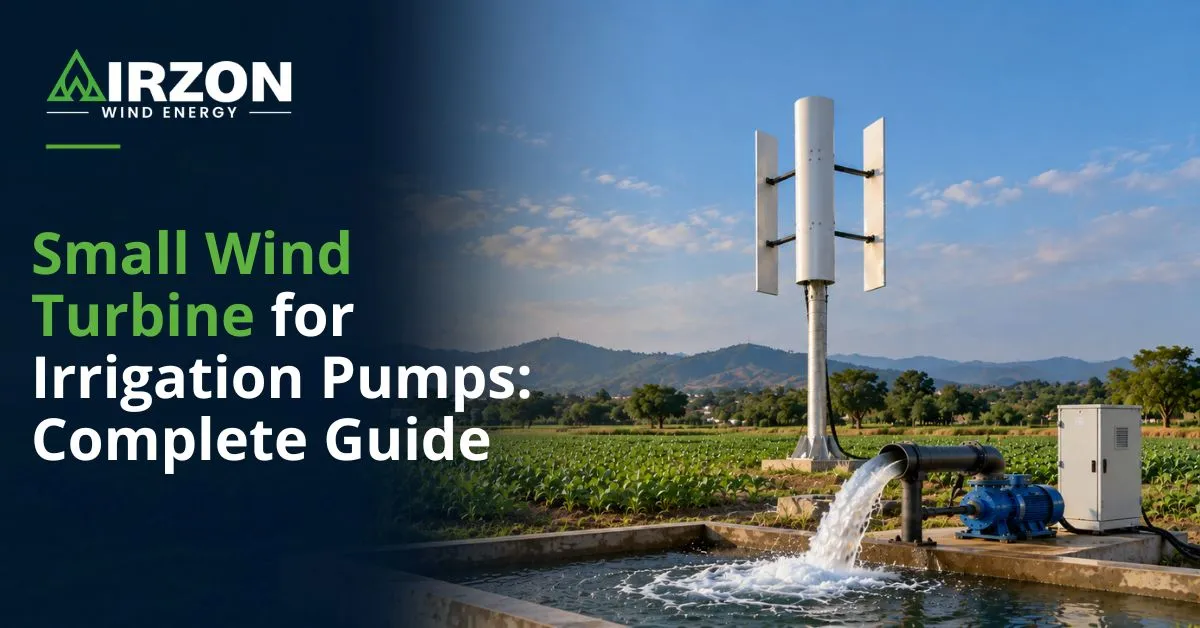
Agricultural irrigation often requires dependable power for lifting and distributing water, particularly in remote areas where grid electricity may be limited or unreliable. A Small Wind Turbine can convert available wind energy into mechanical or electrical power for water pumping, offering an alternative for suitable agricultural sites.
The right system depends on factors such as water depth, pumping requirements, wind conditions, field layout, and whether direct mechanical pumping or electrical power generation is preferred.
How Can a Small Wind Turbine Power an Irrigation Pump?
There are two main approaches to wind-powered water pumping: mechanical wind pumps and wind-electric pumping systems. A Small Wind Turbine can be configured for either approach depending on the water source, pumping requirements, and available wind conditions.
Mechanical systems connect the turbine directly to a pump through components such as rods, pistons, or gears. Because the turbine and pump are mechanically linked, the system generally needs to be installed directly above or close to the water source.
Wind-electric systems use a generator or alternator to convert rotational energy into electricity. This electricity can then operate an AC or DC pump, giving farmers greater flexibility in locating the turbine where wind conditions are more favorable.
| Feature | Mechanical Wind Pump | Wind-Electric System |
| Working principle | Direct mechanical pumping | Wind generates electricity for a pump |
| Siting | Usually above the water source | Turbine and pump can be separately positioned |
| Application | Low-volume, consistent pumping | More flexible agricultural applications |
| Energy use | Primarily dedicated to pumping | Can support storage or other electrical loads |
What Components Are Required?
A typical wind-powered irrigation system combines several components that work together to capture wind energy and move water. In a Small Wind Turbine system, each component plays a specific role in converting available wind into useful pumping power.
- Rotor and blades: The rotor captures the kinetic energy of moving air. Small systems may use horizontal-axis or vertical-axis configurations depending on the application and site.
- Tower: The tower raises the rotor into stronger, less turbulent airflow. Proper obstacle clearance is important because nearby trees, buildings, and other structures can disrupt wind flow.
- Generator or alternator: In wind-electric systems, the generator converts rotational movement into electrical power. Permanent-magnet alternators are commonly referenced for small-scale systems.
- Controller and pump motor: A controller manages electrical input before power reaches the pump. Depending on the system, this can support DC pumps or AC submersible pumps.
- Protection and control equipment: Tail vanes, furling mechanisms, braking systems, wiring, and other components can help manage turbine operation and protect the equipment during changing wind conditions.
Looking for a suitable wind-powered irrigation solution? Contact us to discuss your agricultural energy and pumping requirements.
How Do You Size a Wind Turbine for Irrigation?
Choosing a Small Wind Turbine should begin with the irrigation requirement rather than turbine capacity alone. Water depth, required flow rate, pumping head, operating hours, and local wind conditions all influence the appropriate system size.
Smaller systems in the micro or mini range may support limited farm applications, livestock water supply, or smaller irrigation requirements. Larger systems can be considered for farms requiring greater pumping capacity.
A professional assessment should determine whether the site’s wind resource can provide sufficient energy for the required pumping schedule.
Why Is Site Assessment Important?
Wind availability is one of the most important considerations when using a Small Wind Turbine for irrigation. A turbine may have suitable specifications but still deliver disappointing results if the installation site experiences weak or highly turbulent airflow.
Tower height, surrounding obstacles, terrain, and seasonal wind patterns should therefore be evaluated before installation. The turbine should be positioned to access the strongest practical wind resource while maintaining appropriate structural and safety considerations.
Can Wind Turbines Be Combined with Solar?
Yes, wind and solar can be integrated into a hybrid agricultural energy system where site conditions support both resources. A Small Wind Turbine can complement solar PV by generating power when suitable wind is available, helping diversify renewable energy generation.
Solar PV can provide power during periods of strong sunlight, while wind generation can contribute during different weather conditions or times of day. Batteries or other backup systems can also be incorporated where energy storage is required.
This hybrid approach can reduce dependence on a single renewable resource and provide greater flexibility for irrigation operations, particularly when seasonal or weather-related variations affect wind or solar generation.
What Are the Benefits for Farmers?
A properly designed Small Wind Turbine irrigation system can offer several advantages:
- Renewable energy for water pumping
- Reduced dependence on grid electricity or fuel
- Potentially lower long-term operating costs
- Suitability for remote agricultural locations
- Flexible integration with solar and battery storage
- On-site energy generation for suitable wind resources
However, the economic and technical benefits depend heavily on the site’s wind conditions, pumping requirements, installation costs, and system design.
Frequently Asked Questions
Yes, A Small Wind Turbine can power irrigation through either a direct mechanical pumping system or a wind-electric system that supplies electricity to a pump.
The required wind speed depends on the turbine and pumping system. The supplied reference indicates that some mechanical wind-pumping systems can begin operating around 5–6 mph, but site-specific assessment is important.
They can be used for water pumping, but the appropriate turbine and pump capacity depends on water depth, pumping head, required flow rate, and available wind energy.
Neither is universally better. Mechanical systems can suit direct, lower-volume pumping, while wind-electric systems provide greater flexibility in turbine placement and can support additional electrical applications.
Yes. A hybrid wind-solar system can combine both renewable sources and may provide more flexible energy availability when wind and solar conditions vary throughout the day or year.
Conclusion
A Small Wind Turbine can be a practical renewable-energy option for agricultural water pumping when the site has an appropriate wind resource and the system is correctly designed. Mechanical wind pumps provide direct water pumping, while wind-electric systems offer greater flexibility and the possibility of integrating storage or other farm loads.
Before installation, farmers should evaluate wind conditions, water requirements, tower location, pumping capacity, and seasonal energy demand. Where conditions are suitable, combining wind with solar can further improve the flexibility of a renewable irrigation system.
Related Posts