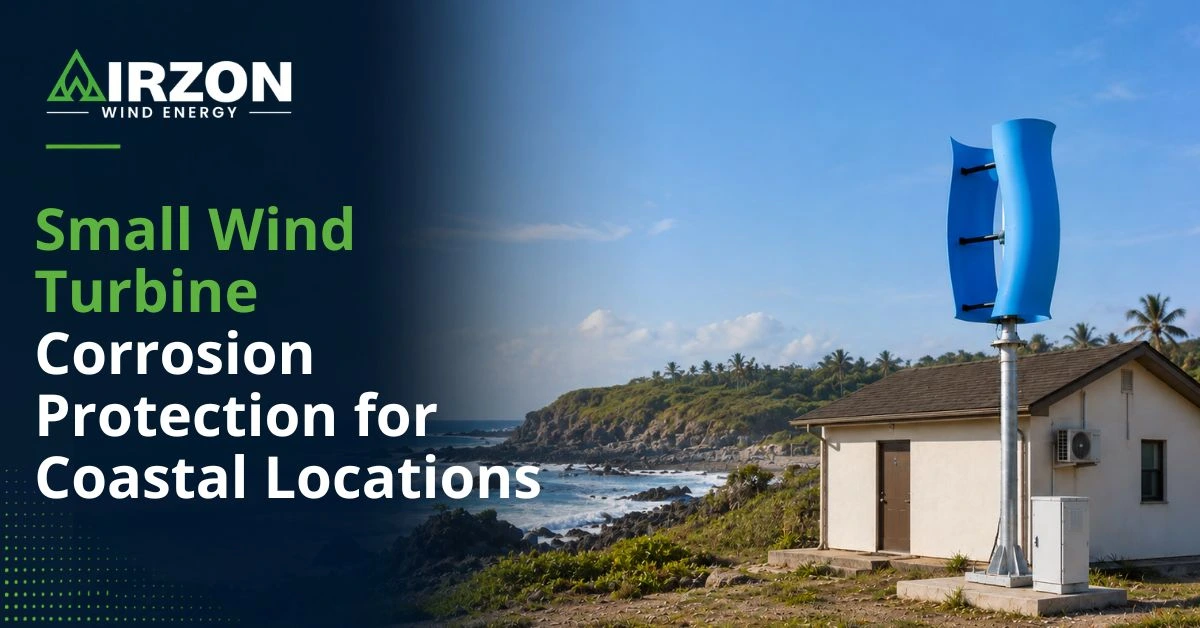
Wind turbine corrosion develops when moisture, oxygen, salts, and vulnerable or damaged surfaces interact over time. Coastal locations can increase this risk because airborne salt settles on towers, blades, fasteners, electrical enclosures, and other exposed components while high humidity prolongs surface moisture. Effective prevention combines appropriate material selection, durable protective coatings, sealed connections, drainage, cleaning, and routine inspections. For a small wind turbine, identifying early rust, coating damage, trapped moisture, and fastener deterioration can help protect structural reliability and reduce unexpected repairs. A proactive corrosion-control program supports dependable operation and helps maintain equipment durability in demanding coastal environments.
Coastal locations offer strong potential for renewable energy, but they also expose equipment to salt spray, high humidity, moisture, and changing weather conditions. These factors can accelerate corrosion and affect the durability of wind energy systems. For a small wind…