Areas with limited or inconsistent wind resources can still benefit from renewable wind energy when…
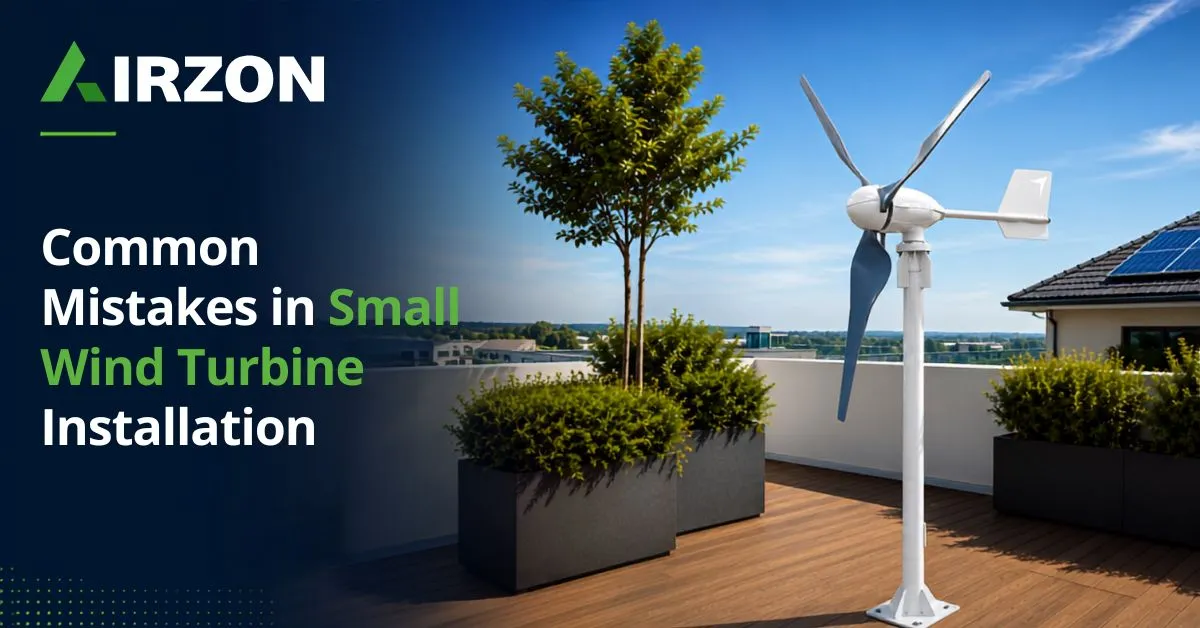
Installing a small wind turbine is an excellent step toward generating clean, renewable energy for residential, commercial, agricultural, and off-grid applications. However, even a high-quality turbine may fail to deliver its expected performance if it is installed incorrectly. Factors such as poor site selection, improper tower height, inaccurate wind assessments, and installation errors can significantly reduce energy output and increase maintenance requirements.
Understanding the most common installation mistakes can help ensure your small wind turbine operates efficiently, delivers reliable power, and provides long-term value.
Why Proper Installation Matters?
The performance of a small wind turbine depends on more than just its design. Proper installation plays a crucial role in determining how efficiently the system captures wind energy and converts it into reliable electricity. Factors such as site selection, tower height, and system configuration all influence overall efficiency, long-term reliability, and power generation.
A properly installed turbine can:
- Maximize energy production
- Improve system reliability
- Reduce maintenance costs
- Extend equipment lifespan
- Support consistent renewable energy generation
By avoiding common installation mistakes, users can make the most of their investment in wind energy.
Common Mistakes in Wind Turbine Installation
A small wind turbine can provide reliable and sustainable energy when installed correctly, but even the most advanced system can underperform if key installation factors are overlooked. From selecting the right location to ensuring proper tower height and electrical connections, every step influences efficiency and long-term performance. By understanding the most common installation mistakes, you can maximize energy generation, improve system reliability, and protect your investment in renewable energy.
Choosing an Unsuitable Installation Location
One of the most common mistakes is installing a turbine where wind flow is obstructed by nearby buildings, trees, or other structures. Since wind moves horizontally across the landscape, obstacles create turbulence that reduces the turbine’s efficiency.
Selecting an open location with consistent wind exposure helps maximize energy generation and improve overall system performance.
Installing the Tower Too Low
Tower height has a direct impact on the amount of wind energy available. Lower elevations experience greater surface friction and turbulence, resulting in weaker and less consistent wind speeds.
Installing a turbine at an appropriate height allows it to access stronger, smoother wind currents and generate more electricity over time.
Mounting a Wind Turbine on Unsuitable Rooftops
Although rooftop installations may appear convenient, not every building provides suitable conditions for a wind turbine. Roof edges can create turbulent airflow that reduces efficiency, while vibrations may affect both the structure and the turbine’s performance.
Before considering a rooftop installation, a professional site assessment should determine whether the location provides adequate wind conditions and structural support.
Overlooking Nearby Obstacles
Trees, utility poles, neighbouring buildings, hills, and future developments can all disrupt wind flow. Ignoring these obstacles during planning may result in inconsistent energy production and reduced system efficiency.
A thorough site evaluation helps identify potential obstructions before installation begins.
Estimating Wind Resources Without Reliable Data
Assuming that an area has sufficient wind based solely on observation can lead to poor investment decisions. Wind conditions vary throughout the year, making accurate measurements essential.
Professional wind assessments and site-specific data provide a more reliable understanding of the available wind resource and help determine whether a location is suitable for a small wind turbine.
Selecting a Turbine Based Only on Rated Capacity
Choosing a turbine solely because it has a higher rated output can be misleading. Rated capacity represents performance under specific wind conditions, which may not reflect the actual wind speeds at the installation site.
Instead, turbine selection should consider local wind conditions, expected energy demand, and the manufacturer’s performance data.
Improper Blade Assembly
Incorrect blade installation can reduce aerodynamic efficiency and negatively impact energy generation. Proper assembly according to manufacturer guidelines is essential for safe and reliable operation.
Professional installation ensures that all components are correctly aligned and securely fitted.
Want to ensure your small wind turbine is installed for maximum performance? Contact us today to explore reliable wind energy solutions and expert installation guidance.
Poor Electrical Wiring
Improper cable sizing, unnecessary cable lengths, or poorly installed electrical connections can lead to energy losses during power transmission.
Using appropriately sized wiring and following recommended electrical practices helps improve system efficiency and reduce unnecessary power loss.
Ignoring Fastener and Structural Checks
Loose bolts and improperly secured structural components can lead to excessive vibration, increased wear, and long-term mechanical issues.
Routine inspections and proper tightening of all structural connections help maintain system safety and performance.
Best Practices for Successful Small Wind Turbine Installation
| Best Practice | Benefit |
| Conduct a professional site assessment | Identifies the most suitable installation location |
| Install at an appropriate tower height | Improves wind exposure and energy production |
| Keep the turbine away from obstructions | Reduces turbulence and enhances efficiency |
| Use accurate wind resource data | Supports proper system planning and sizing |
| Follow manufacturer installation guidelines | Improves safety and long-term reliability |
| Perform regular inspections and maintenance | Helps maintain consistent performance and reduce downtime |
How Airzon Wind Energy Supports Reliable Installations?
At Airzon Wind Energy, every small wind turbine solution is designed with performance, durability, and long-term reliability in mind. From system design and site consultation to installation and technical support, our team focuses on helping customers achieve efficient renewable energy generation.
By combining advanced engineering with careful planning and professional installation practices, Airzon Wind Energy delivers wind energy solutions that perform consistently across residential, commercial, industrial, and off-grid applications.
Frequently Asked Questions
Site selection determines the quality of available wind, directly affecting energy generation, system efficiency, and long-term performance.
Yes. Obstacles create turbulence that reduces wind flow and limits the turbine’s ability to generate electricity efficiently.
Yes. Taller towers generally access stronger and more consistent wind speeds, allowing the turbine to produce more energy.
No. The turbine should be selected based on local wind conditions, energy requirements, and the manufacturer’s performance data rather than rated output alone.
Regular inspections are recommended to check structural components, electrical connections, and overall system performance, helping prevent unexpected issues.
Conclusion
Installing a small wind turbine correctly is essential for achieving reliable renewable energy generation and long-term system efficiency. Avoiding common mistakes such as poor site selection, insufficient tower height, inaccurate wind assessments, and installation errors can significantly improve performance while reducing maintenance costs. With careful planning, quality equipment, and professional installation support, a small wind turbine can provide dependable, sustainable energy for years to come.
Related Posts